Aluminum is lightweight, strong, corrosion-resistant, and easy to use in everything from machine guards to aerospace components. Cutting it well, however, is not always as simple as choosing the fastest available process. Heat can distort thin sections, alter the condition of an edge, or create extra finishing work. Thick aluminum plate brings a different set of challenges, especially when the part has complex contours or must stay flat.
That is where abrasive waterjet cutting earns its place. This guide explains how waterjet cutting aluminum works, why the cold-cutting process can protect the material, how it compares with laser, plasma, and machining, and what to include in a quote request.
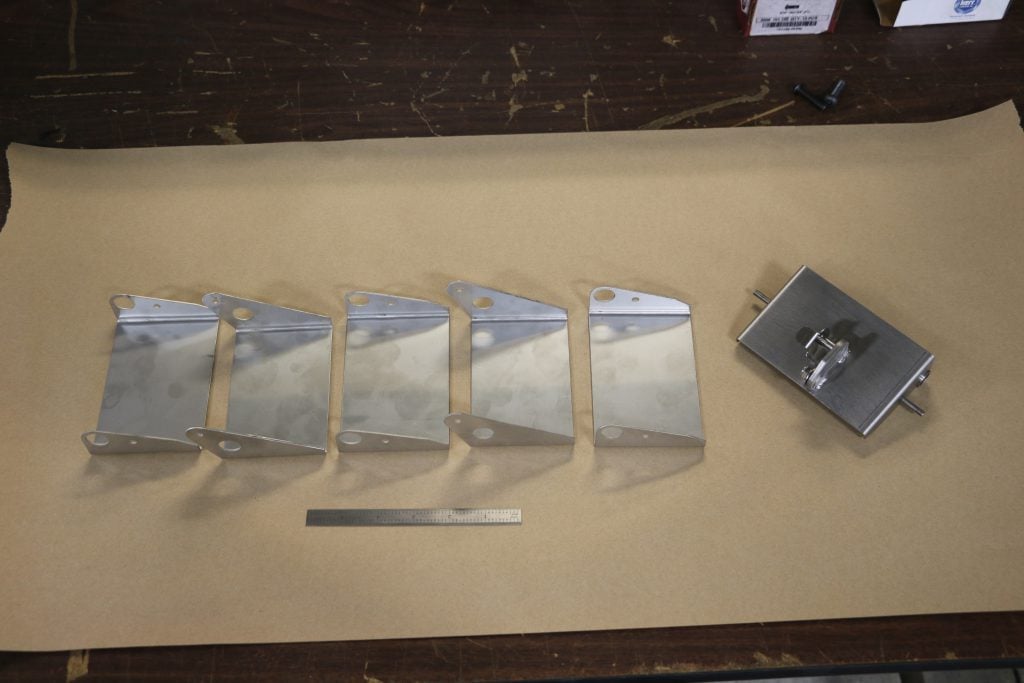
Why Aluminum Can Be Challenging to Cut
Aluminum machines readily, but its physical properties affect how different cutting processes perform. It conducts heat quickly, reflects some types of laser energy, and can move when heat is concentrated in a small area. Thin sheet may warp, while a thermal cut edge may need cleanup before welding, forming, coating, or precision machining.
The alloy and temper also matter. A soft aluminum sheet, a heat-treated aerospace plate, and a cast tooling plate may react differently even when the dimensions are similar. The correct cutting method depends on more than the word “aluminum” on a drawing.
Part geometry adds another layer. Narrow webs, small tabs, closely spaced openings, and long unsupported edges may be more sensitive to movement. On thick plate, the process must cut through the full depth while controlling edge taper and maintaining the required profile.
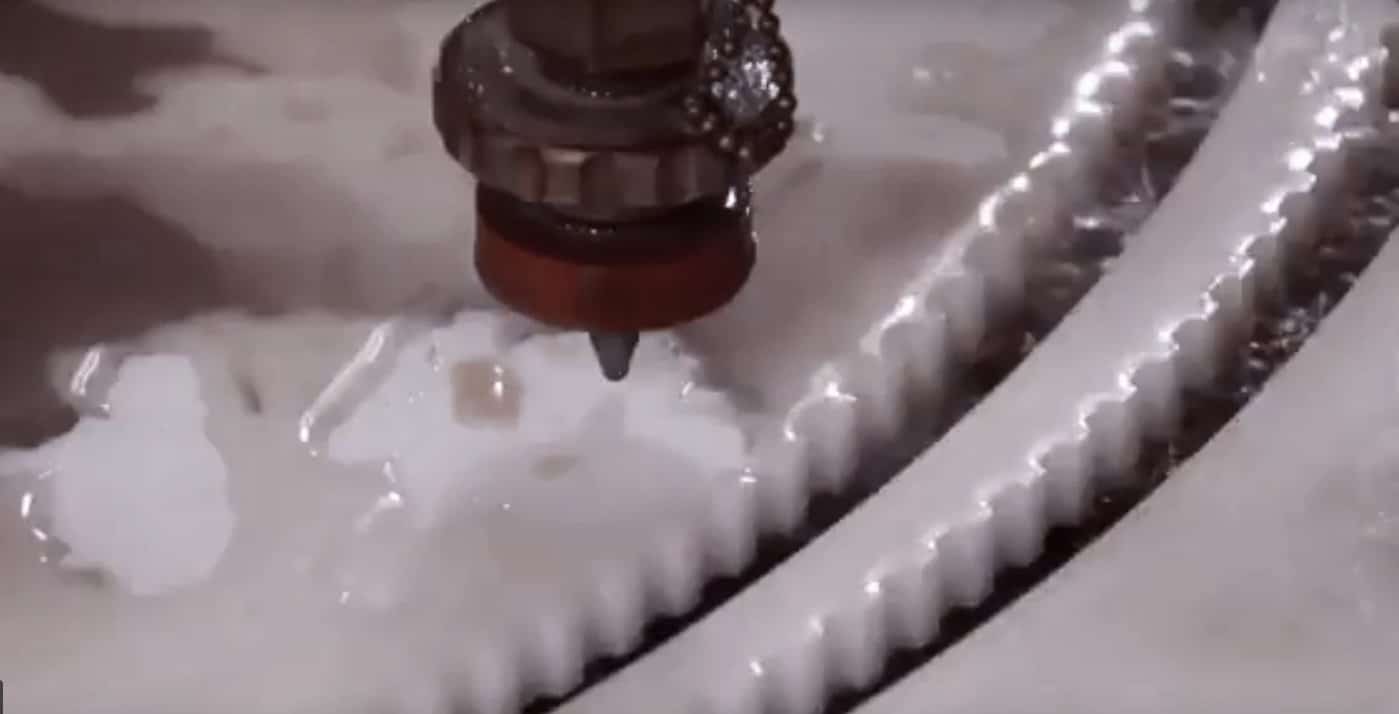
Waterjet avoids many thermal concerns because it removes material mechanically instead of melting it. A CNC-controlled stream of pressurized water and garnet abrasive follows the programmed path, cutting through the aluminum without creating a heat-affected zone.
The Main Benefits of Waterjet Cutting Aluminum
Waterjet is not the fastest or least expensive answer for every aluminum part. It becomes especially valuable when material condition, thickness, edge quality, or design flexibility matters more than raw cutting speed.
No Heat-Affected Zone
The biggest advantage is simple: waterjet is a cold-cutting process. It does not melt the aluminum, so it does not create the heat-affected zone associated with laser or plasma cutting. The material at the edge retains the condition it had before cutting.
That can be important for heat-treated alloys, parts with narrow features, and components that must remain flat. It also reduces the risk of burn marks and thermally hardened or softened areas near the cut. When a part will be welded, formed, coated, or machined later, starting with an unchanged edge can make the next operation more predictable.
Thick-Plate Capability
Waterjet performs well on thicknesses that can challenge other profile-cutting processes. Lindsay Machine Works offers waterjet cutting for aluminum up to 6 inches thick, with a working area up to 60 by 120 inches. Actual capacity and cut quality depend on the alloy, geometry, tolerance, and project requirements, so the material and thickness should always be confirmed during quoting.
This capability can replace slower rough machining or multiple saw cuts when a thick plate needs a complex two-dimensional profile. The waterjet can create the near-net shape first, leaving only critical bores, pockets, threads, or mating surfaces for CNC machining.
Clean, Usable Edges
Properly programmed waterjet cutting can produce a smooth edge with minimal burr and no slag. Many profiles can move directly to forming, welding, or assembly. Parts with precision interfaces may still require machining, but the amount of stock and cleanup can often be reduced.
Edge quality can also be adjusted to suit the job. A rougher, faster cut may be appropriate for a blank that will be machined later. A slower, higher-quality cut may make sense when the waterjet edge will remain on the finished part. The best setting is the one that meets the function without paying for unnecessary finish.
Complex Profiles and Efficient Material Use
Because the cutting stream is narrow and CNC controlled, waterjet can follow curves, internal cutouts, tight radii, and irregular shapes. Parts can be nested closely to improve sheet or plate yield, which matters when the selected aluminum alloy is expensive.
The process also places very little mechanical load on the workpiece. There is no cutting tool pushing sideways against the part, so delicate profiles can often be cut without the fixturing forces required by conventional machining. Small lead-ins and planned tabs may still be used to keep pieces stable during the cut.
Waterjet Compared With Other Ways to Cut Aluminum
The better choice depends on the part, not on a universal ranking. Waterjet offers a useful balance, but laser, sawing, routing, plasma, and CNC machining each have situations where they make more sense.
Waterjet vs. Laser Cutting
Laser cutting is often faster on thin aluminum sheet, especially for production quantities with detailed profiles. It can produce a narrow kerf and excellent repeatability. For suitable sheet thicknesses and designs, laser may deliver the lowest part cost.
Waterjet becomes more attractive when the plate is thick, heat input is unacceptable, or the alloy and surface condition make thermal processing less desirable. It does not depend on how reflective the material is and does not leave a thermally altered edge. The tradeoff is generally slower cutting speed and the added cost of abrasive.
Waterjet vs. Plasma Cutting
Plasma can cut conductive aluminum quickly and may be economical for larger, less detailed profiles. It is often practical when tolerances are moderate and the edge will be ground, machined, or welded into a larger fabrication.
Waterjet usually provides a cleaner edge, finer detail, and no heat-affected zone. It is often the stronger option for precision blanks, thick plate, visible edges, or parts where post-cut cleanup would erase plasma’s initial cost advantage.
Waterjet vs. Sawing and CNC Machining
Sawing is efficient for straight cuts, bars, rectangles, and simple blanks. CNC machining is the right process for three-dimensional features, tight-tolerance holes, pockets, threads, and finished surfaces. Neither must compete with waterjet; they can work together.
For example, a thick aluminum plate can be waterjet-cut close to its final outline, then moved to a machining center for critical features. This approach can reduce roughing time and material removal. Lindsay Machine Works can combine profile cutting with CNC machining for aluminum parts when the drawing requires more than a two-dimensional cut.
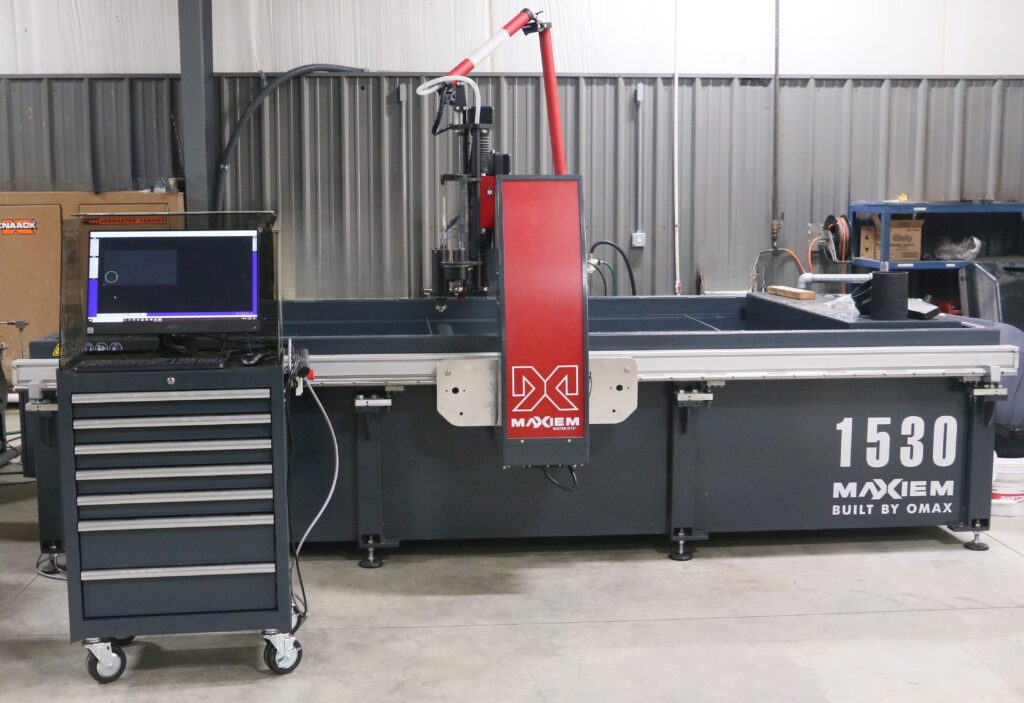
Designing an Aluminum Part for Waterjet Cutting
A few practical decisions can improve quality and control cost. Start by identifying the dimensions that affect function. Lindsay Machine Works states that its waterjet process can hold cut tolerances as tight as approximately ±0.010 inch, but achievable results depend on material thickness, profile geometry, edge-quality setting, and inspection requirements.
Inside corners will have a radius related to the cutting stream, so a perfectly sharp internal corner is not realistic. Small holes and narrow slots also need to be reviewed in relation to plate thickness. If a hole must accept a bearing, dowel, or precision fastener, waterjet can create a pilot opening, and CNC machining can finish it to size.
Also consider which edges will remain as cut. A cosmetic outside profile may justify a higher cut-quality setting, while a blank with machining allowance can be cut faster. Clearly marking machined surfaces and stock allowance on the drawing helps the estimator choose an efficient toolpath.
For the most useful review, provide:
-
Aluminum alloy and temper
-
Sheet or plate thickness
-
CAD file and dimensioned drawing
-
Quantity and repeat-order expectations
-
Critical tolerances and inspection needs
-
Required edge condition
-
Secondary operations such as machining, bending, welding, or assembly
-
Target delivery date
Where Waterjet-Cut Aluminum Parts Are Used
Waterjet-cut aluminum appears across industrial equipment, transportation, automation, food-processing machinery, architectural work, and custom fabrication. Common examples include mounting plates, guards, brackets, flanges, machine bases, panels, fixtures, signage, covers, and near-net blanks for machined components.
The process is especially useful for prototypes and short runs because it can produce complex profiles directly from CAD data without a dedicated cutting die. The same programmed process can then support repeat orders when the design is finalized.
Some projects need more than a cut profile. A plate may require bending, welding, machining, hardware installation, or assembly before it is ready to use. Keeping those steps with a shop that offers custom metal fabrication can reduce handoffs and make it easier to resolve questions about fit, tolerance, and finish.
See Whether Waterjet Fits Your Aluminum Part
If your aluminum part is thick, heat-sensitive, difficult to nest, or likely to need extensive cleanup after thermal cutting, waterjet deserves a closer look. Lindsay Machine Works can review the alloy, thickness, drawing, quantity, and downstream operations before recommending a process. Explore its CNC waterjet cutting capabilities for aluminum and send your CAD file or drawing for a practical process recommendation and quote.