Choosing a cutting process can look simple until you start balancing material, thickness, tolerances, edge quality, lead time, and budget. Waterjet, laser, and plasma can all turn a flat sheet or plate into a finished profile, but they do it in very different ways. The best option is not always the fastest machine or the process with the tightest possible cut. It is the one that meets the part’s actual requirements without adding avoidable cost or secondary work.
This guide explains how the three processes work, where each one performs best, and what tradeoffs to consider before requesting a quote. By the end, you should have a clearer idea of which cutting method fits your part and what information a machine shop needs to confirm that choice.
The Quick Answer: Match the Process to the Part
If you need a starting point, focus on the material, its thickness, and whether heat can affect the part.
Choose waterjet when the material is heat-sensitive, nonmetallic, unusually thick, or needs a clean cut without a heat-affected zone. Choose fiber laser when you need fast, precise cutting in sheet metal, especially for detailed profiles or repeat production. Choose plasma when you need an economical way to cut conductive metal plate and the job allows somewhat looser tolerances or additional edge finishing.
Geometry and downstream operations can still change the decision. A plasma-cut bracket for a structural assembly may be practical, while a similar part with small features and a cosmetic edge may fit laser or waterjet better.
How Waterjet, Laser, and Plasma Cutting Work
All three systems follow programmed toolpaths, but the way they separate material affects heat input, material compatibility, cut speed, and edge condition.
Waterjet Cutting
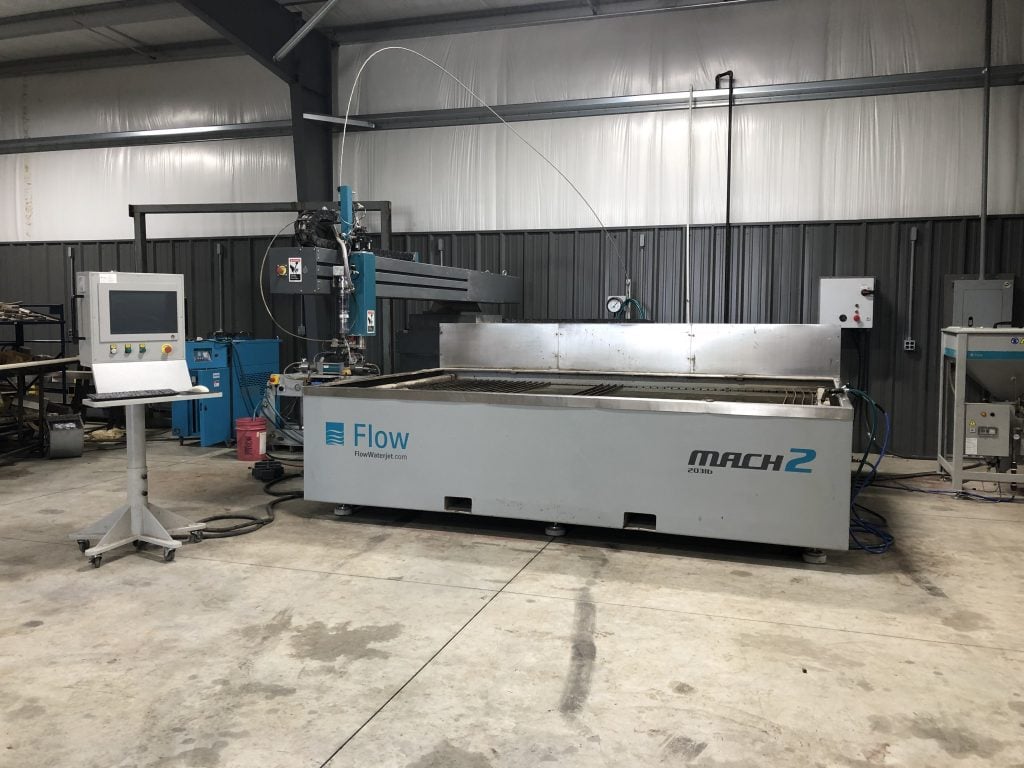
Waterjet cutting uses a narrow stream of highly pressurized water, usually mixed with garnet abrasive for hard materials. Instead of melting the workpiece, the stream erodes a path through it. This makes waterjet a cold-cutting process with no heat-affected zone.
That matters when heat could warp a thin part, alter hardened metal, affect a coating, or damage a nonmetallic component. Lindsay Machine Works uses Flow and Omax equipment for CNC waterjet cutting on a broad range of materials and complex profiles.
Fiber Laser Cutting
A fiber laser concentrates a high-energy beam on a small area, melting or vaporizing material while assist gas clears the cut. The focused beam supports narrow kerfs, fine features, and fast travel speeds, particularly in thinner sheet metal.
Laser cutting is a thermal process, so it creates heat near the edge. For many metal parts, the combination of speed, repeatability, and detail makes fiber laser cutting an efficient production choice.
Plasma Cutting
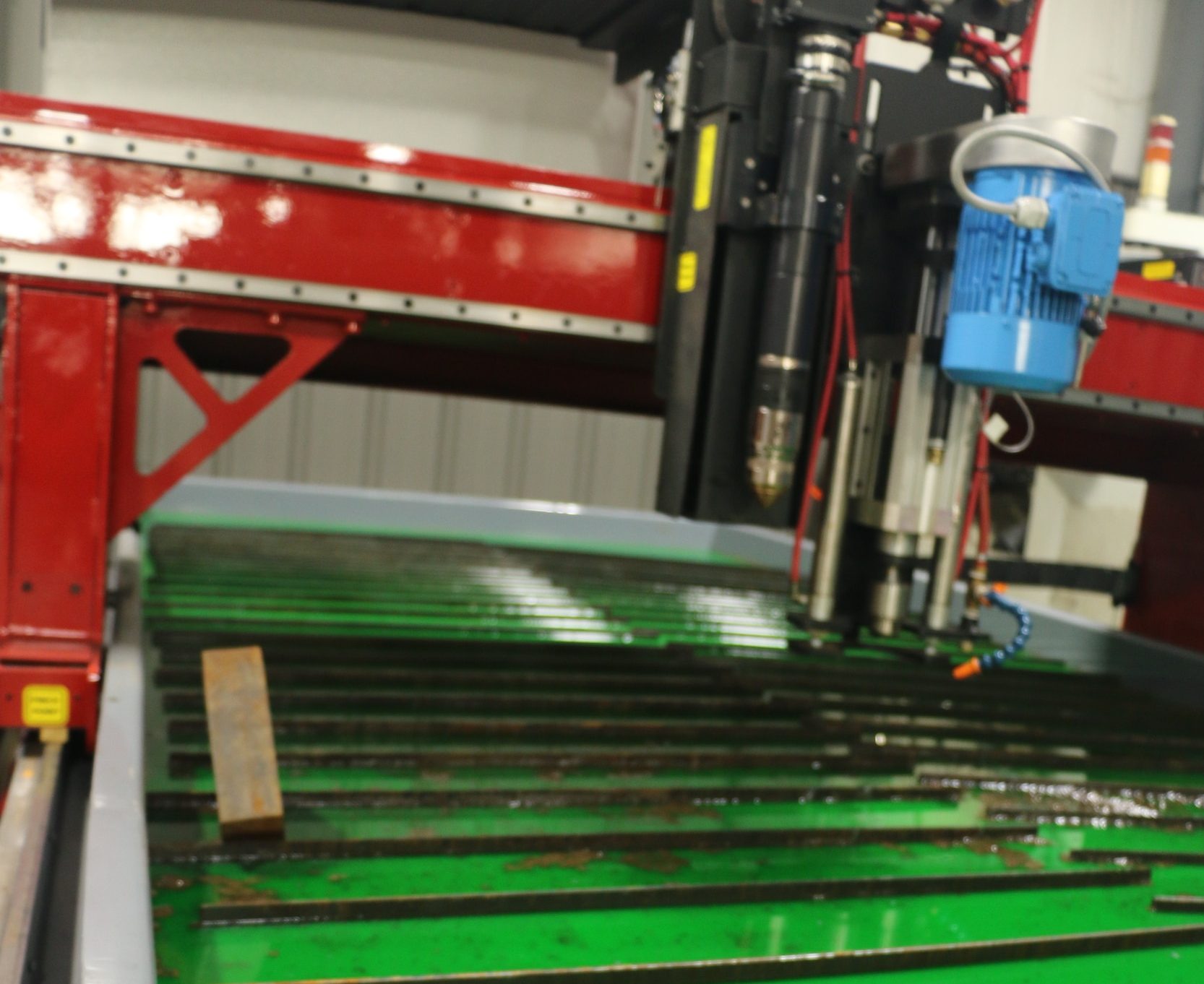
Plasma cutting sends an electrical arc through ionized gas to melt conductive material. A high-velocity gas stream then removes the molten metal from the cut. Because the process depends on an electrical circuit, it is intended for conductive metals rather than plastics, stone, glass, or other nonconductive materials.
Modern CNC plasma cutting is fast, especially on carbon steel and medium-to-thick plate. It suits structural parts, frames, brackets, and fabrication work where throughput and cost matter more than the finest possible edge.
Compare the Factors That Affect Your Finished Part
There is no single winner across every category. The right choice depends on which factors are critical and which ones have room for compromise.
Material Compatibility and Thickness
Waterjet has the widest material range of the three. It can cut conductive and nonconductive materials, including steel, aluminum, plastics, rubber, composites, glass, and stone. It is also useful for thick stock that may be difficult or inefficient for a laser.
A fiber laser is strongest on metal sheets, including carbon steel, stainless steel, aluminum, copper, and brass. Its biggest productivity advantage is usually in thin-gauge material, although practical limits depend on the material, machine power, edge quality, and geometry.
Plasma works only on electrically conductive materials. It is well suited to carbon steel and heavier plate, where it can deliver high cutting speeds at an economical cost.
Precision, Kerf, and Feature Detail
Laser usually offers the narrowest kerf and excels at small features, intricate contours, and closely nested parts. Waterjet handles accurate, complex profiles without thermal distortion, although the stream can develop slight taper through thicker material.
Plasma is accurate enough for many fabricated components, but its wider kerf makes it less suitable for very small holes, delicate details, or the tightest tolerances. Identify critical dimensions so the shop does not price the whole profile to an unnecessary precision level.
Heat and Material Condition
Waterjet is the clear choice when the part must avoid thermal effects. It does not create a heat-affected zone, so it helps preserve the material’s original condition near the cut.
Laser and plasma both introduce heat. Laser applies it in a small, concentrated area, while plasma generally puts more heat into the cut. The significance depends on material type, thickness, part geometry, and what happens next. A large structural plate may tolerate thermal cutting easily, while a thin, narrow feature may be more likely to move or distort.
Edge Quality and Secondary Work
Waterjet commonly leaves a smooth, clean edge with no slag and may reduce the need for grinding or machining. Laser can also produce a clean, precise edge that is ready for many forming, welding, or assembly operations.
Plasma may leave more taper, dross, or edge rounding, depending on thickness and cut settings. If the part will be welded into a larger assembly, modest cleanup may be acceptable. If the cut edge is cosmetic, interfaces with another component, or serves as a finished locating surface, the cost of secondary work should be included in the comparison.
Speed and Total Cost
Laser is often the fastest choice for detailed profiles in thin sheet. Plasma is typically fast and cost-effective for conductive metal plate, particularly when the tolerances are appropriate for the process. Waterjet usually cuts more slowly because it removes material through erosion, and abrasive adds operating cost.
Machine time is only one part of the final price. A slower process can still be the better value if it prevents distortion, handles a material the other processes cannot cut, or eliminates grinding, heat treatment, or finish machining. Compare the total path from raw stock to usable part, not just the initial cutting rate.
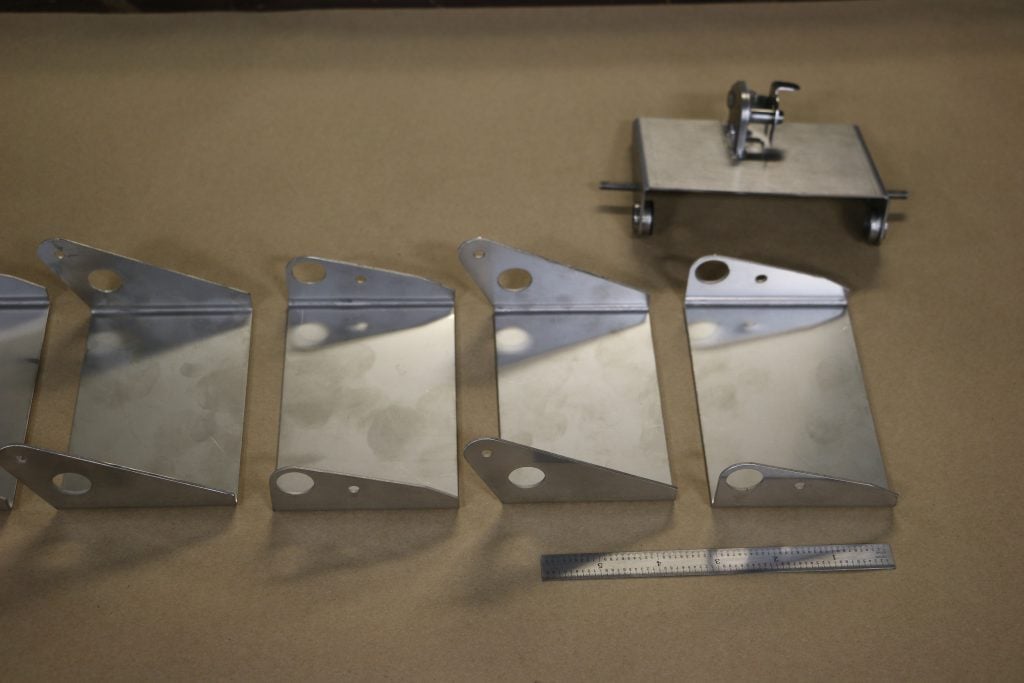
Which Cutting Method Fits Common Part Requirements?
Use the part’s most important requirement to narrow the field.
Waterjet is often the best fit for heat-treated metals, thick aluminum or steel, plastics, rubber, composites, glass, stone, layered materials, and parts that need a clean edge without thermal change. It is also helpful for prototypes when material flexibility is more important than maximum cutting speed.
Fiber laser is often the best fit for thin-to-medium metal sheets, detailed profiles, small holes, repeatable production parts, enclosures, guards, panels, and components that benefit from efficient nesting. It is a strong option when precision and throughput carry equal weight.
Plasma is often the best fit for carbon steel plate, structural components, base plates, brackets, frames, agricultural or construction equipment parts, and larger fabricated pieces. It makes sense when speed and cost are priorities, and the design does not demand laser-like detail or a waterjet-finished edge.
Some projects benefit from more than one process. A shop may plasma-cut a large blank, machine critical holes, and weld the component into an assembly. Another part may be waterjet-cut to protect material properties, then receive CNC machining only on a few close-tolerance surfaces. The best manufacturing plan uses each process where it adds value.
What to Send With Your Request for Quote
A clear RFQ helps the shop recommend the right process and provide a more accurate price. Send a CAD file or drawing when possible, along with:
-
Material grade and thickness
-
Part quantity and expected repeat orders
-
Critical dimensions and tolerances
-
Required edge or surface condition
-
Any heat-sensitivity, hardness, coating, or grain-direction concerns
-
Needed secondary work, such as bending, machining, welding, or assembly
-
Target delivery date
If you are unsure about a tolerance or finish callout, explain how the part functions. Knowing where it fits, how it is loaded, and which surfaces mate with other components often gives the estimator better guidance than a blanket tolerance applied to every feature.
Get the Right Cut Without Guesswork
You do not have to choose a process before asking for a quote. Lindsay Machine Works can review your material, drawing, quantity, and finish requirements, then recommend waterjet, fiber laser, plasma, or a combination of cutting and secondary operations. If heat control, material versatility, or clean edges are central to your project, start with our CNC waterjet cutting services and send your drawing for a practical process recommendation and quote.
Choosing us means your parts get our deep experience. We aim for excellence in every project. Our shop uses the latest tech to make your supply chain smoother and faster.
Get in touch with our experts to talk about your design challenges. We’re ready to offer the CNC Machining Services your business needs to thrive in a competitive market.