5-Axis CNC Machining FOR COMPLEX PARTS AND PRODUCTION RUNS
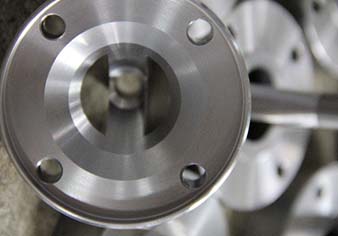 5-axis CNC machining pays for itself on the right part. Fewer setups, tighter tolerances across multiple faces, and shorter lead times can save real money on complex work, even when the hourly rate looks higher on paper. Lindsay Machine Works, Inc. runs 5-axis milling and 5-axis turning on the same floor as 3-axis and 4-axis equipment, so quotes reflect the true benefit of the process instead of a shop rate on a machine list.
We’ll walk through what 5-axis CNC machining actually delivers on the parts that need it, where the savings come from, and what to send for a quote.
Fewer Setups on Complex Parts
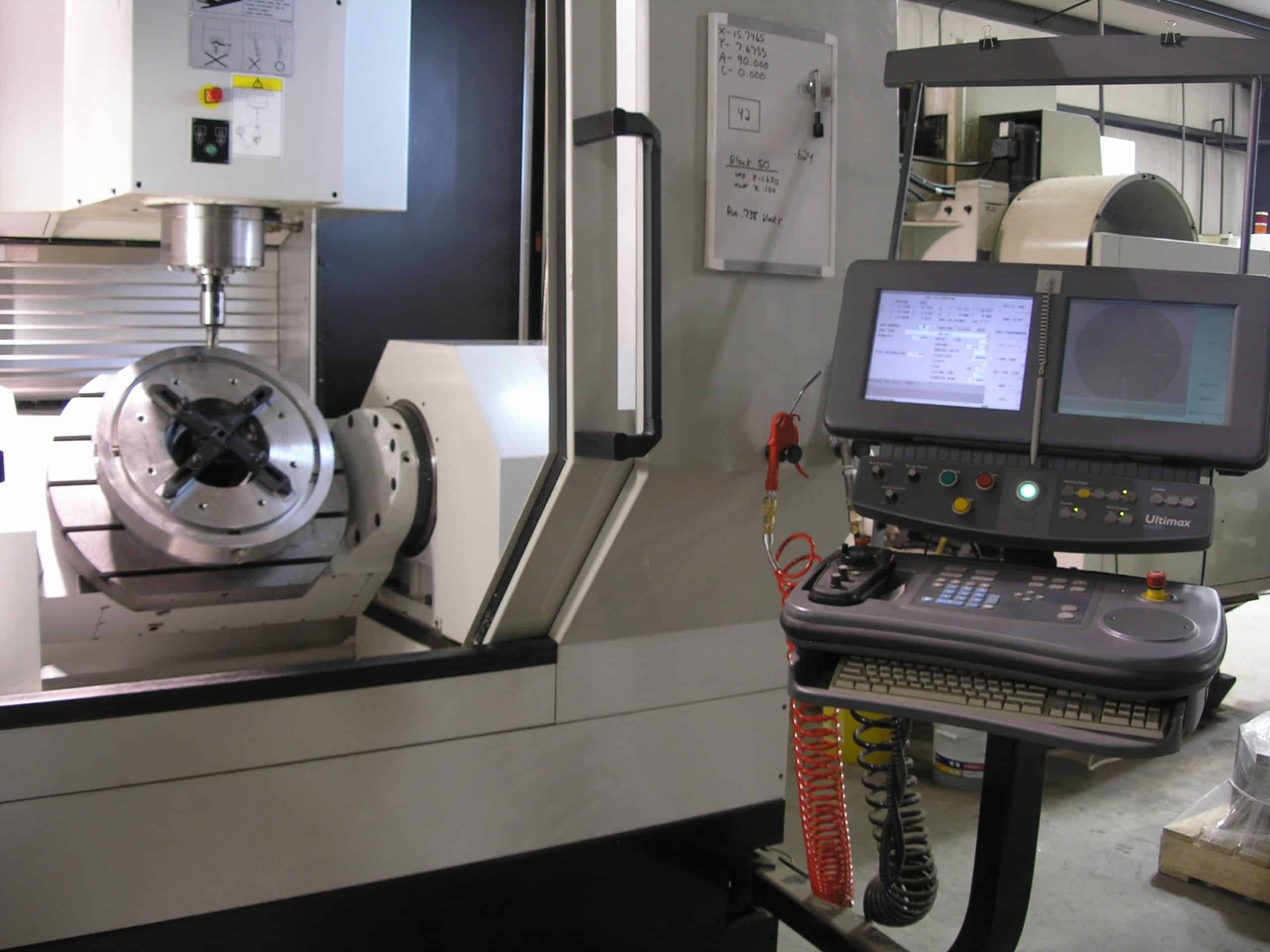
The biggest benefit of 5-axis CNC machining is setup reduction. A part with features on three, four, or five faces would take multiple setups on a 3-axis machine. Each setup adds handling time, alignment work, and tolerance risk. On a 5-axis machining center, the same part rotates and tilts inside the machine, so the tool reaches those faces without an operator re-clamping between operations.
For a housing with bores and hole patterns on multiple sides, that can mean going from three or four fixture setups on a 3-axis machine to one setup on a 5-axis machining center. The savings show up in three places on the quote:
- Fewer hours of shop time per part
- Lower fixturing cost, because one setup replaces several
- Lower inspection cost, because the part is inspected against one reference instead of several
On low- and mid-volume complex parts, the 5-axis quote often lands below the 3-axis quote once total setup, fixturing, and inspection time are counted.
Tighter Tolerances That Hold on the Print
Every time a part is re-fixtured, the relationship between features on different sides can drift. Even good fixturing loses tenths across multiple setups, and that drift shows up on inspection when a print calls for tight true position, concentricity, or parallelism across faces.
5-axis CNC machining protects those relationships because the part stays in one setup. Features cut in the same cycle keep their reference to each other, which is exactly what tight cross-face tolerances need.
For parts with tight concentricity between turned and milled features, 5-axis turning centers with live tooling and a sub-spindle solve the same problem on the rotational side. Turned features, milled flats, cross-holes, and threads can be finished in a single setup rather than moving between a lathe and a mill.
Every job passes through a climate-controlled inspection area, with a Starrett AV350 vision and probe system, a Mitutoyo CMM, calibrated micrometers, and digital height gauges checking parts against the print. First article inspection reports and material certifications are available on request.
Complex Geometry That Other Machines Cannot Reach
 Some parts are not just multi-sided — they have geometry a 3-axis approach cannot cut cleanly at all. Angled ports, drafted pockets, undercut features, sculpted contours, and impeller-like blades all sit outside a straight-down 3-axis tool path.
5-axis CNC machining tilts and rotates the tool relative to the part so the cutting edge stays tangent to the surface. That opens up:
- Angled features and drafted pockets in one setup
- Undercuts and complex 3D geometry that 3-axis cannot reach
- Sculpted contours with cleaner surface finishes
- Longer tool life on hard-to-reach features, because the tool cuts at the right angle instead of reaching in with a longer, weaker path
If your CAD model has surfaces you cannot mill straight down into, the part is almost certainly a 5-axis candidate. Learn more about how our multi-axis capacity fits together across 3, 4, and 5-axis work on our Multi-Axis CNC Machining page.
Shorter Lead Times on Production Work
Setup time is not just cost — it is calendar time. A part that needs four setups on a 3-axis machine has to wait between fixtures. It has to be inspected between operations. It sometimes waits for a fixture to come free from another job.
5-axis CNC machining collapses that timeline. One setup means the part goes from raw stock to finished features in a continuous cycle. On production work, that lets more parts flow through the machine per shift, and it lets the same production plan hit tighter delivery dates.
For buyers with a hard deadline behind the quote, that lead time difference is often more valuable than the per-part price difference.
Lower Total Cost per Finished Part
Shop rate is only part of the picture. The number that matters is total cost per finished, inspected, ready-to-ship part. On complex work, 5-axis CNC machining usually wins that math even when the hourly rate is higher, because:
- Setup hours drop sharply
- Fixture cost drops
- Inspection hours drop
- Scrap and rework drop, because the tolerances hold the first time
- Lead time drops, which reduces expediting and downstream inventory cost
Adding those up on a complex part, the 5-axis quote often comes in below the 3-axis quote once every line is counted. On simpler parts, 3-axis is still the right home — pushing every part to 5-axis is expensive when the geometry does not need it. Learn more about where 3-axis is still the smart choice on our 3-Axis Machining Services page.
When 5-Axis CNC Machining Pays Off Most
A short list of situations where the 5-axis benefit is usually the largest:
- Parts with features on three or more faces that must stay true to each other
- Parts with angled features, drafted pockets, or undercuts
- Parts with tight true position or concentricity across sides
- Complex 3D geometry that a 3-axis approach cannot reach cleanly
- Low- and mid-volume complex work where setup dominates the quote
- Rotational parts with milled features that a lathe and mill would otherwise have to split
- Production work where lead time is on a hard deadline
If two or three of those match your part, the 5-axis benefit is worth quoting.
Why Buyers Choose Lindsay Machine Works, Inc.
You get more than a machine list. Lindsay Machine Works, Inc. has been producing precision parts for OEMs, contract buyers, and end users for more than 30 years. The shop runs more than 80 machines in a 35,000 square foot facility, with 3-axis, 4-axis, and 5-axis CNC machining, grinding, fabrication, and a dedicated inspection area all under one roof.
That means the 5-axis benefit gets applied to the parts that will actually see the savings, with one team from quote to finished part.