MIG Welding Services
MIG WELDING FOR PRODUCTION AND STRUCTURAL PARTS
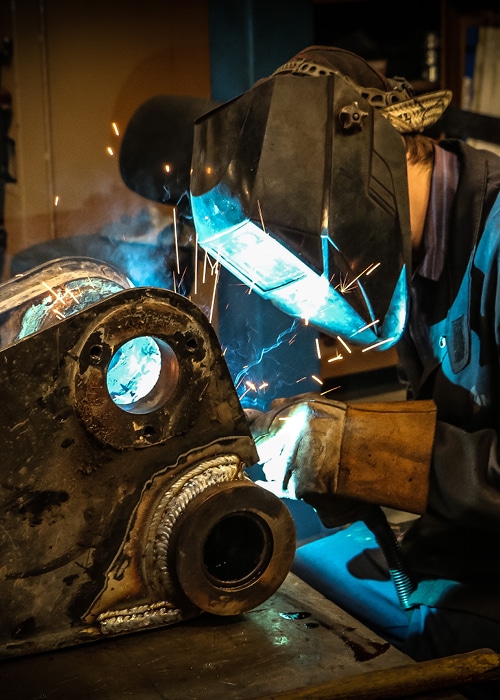
When you need strong, consistent welds on steel parts, MIG welding services are often the fastest way to get there. Lindsay Machine Works, Inc. MIG welds prototypes, production runs, and structural parts in its Independence, Missouri shop, alongside TIG and stick welding. Because cutting, forming and welding happen under one roof, your parts move from raw material to finished weldment without leaving the building.
At Lindsay Machine Works, we deliver precision machining and welding solutions tailored to your project requirements. Our team focuses on quality workmanship, dependable turnaround times, and responsive service from start to finish.


What Are MIG Welding Services?
MIG welding services join metal with gas metal arc welding (GMAW), a process that feeds a continuous wire electrode through the welding gun while a shielding gas protects the weld. Because the wire feeds itself, the welder can lay longer welds without stopping, which makes MIG one of the most productive welding processes.
MIG and MAG welding are both forms of GMAW. The difference is the shielding gas: an inert gas for MIG, or an active gas blend for MAG. At Lindsay Machine Works, MIG sits next to TIG and stick welding, and the team chooses the process that fits your material, thickness and project requirements. If you’re still deciding between processes, this comparison of MIG vs. TIG welding covers the trade-offs.
Which Materials Are a Good Fit for MIG Welding?
MIG welding is best known for carbon and mild steel, and it can also join stainless steel and aluminum with the right wire and shielding gas. Lindsay Machine Works welds steel, stainless steel and aluminum every day, so the team can tell you quickly whether MIG suits your part.
Carbon and Mild Steel
Steel is where MIG does most of its work. Frames, brackets, bases, guards and plate assemblies are common MIG jobs because the process builds strong welds at a steady pace.
Stainless Steel
Stainless steel can be MIG welded when speed matters more than a polished weld appearance. For thin stainless or welds that stay visible, the team may recommend TIG instead.
Aluminum
Aluminum conducts heat quickly and needs a different setup than steel. Tell the team your aluminum grade and thickness on your drawing, and they’ll confirm the best process before quoting.
Is MIG Welding a Good Fit for Production Runs?
Yes. MIG welding is a strong fit for production work because the continuous wire feed keeps the welder moving, which helps keep cost per part down on repeat jobs.
Consistent welds start with consistent parts. Lindsay Machine Works can cut weldment blanks in-house on its CNC plasma cutting table, then bend and fit them before welding. Keeping cutting, forming and welding in one shop helps each part in a run match the print.
Many buyers start with a prototype or first article, approve it, then move into small to mid-size production runs. The shop minimum is $200 per project, so you can test a design before you commit to volume.
For repeat orders, keep your drawing revision and quantity on each request. That lets the team build the next run to the same print as the last one.
Can You MIG Weld Structural Frames and Heavy Parts?
Yes. Lindsay Machine Works regularly fabricates frames, machine bases, enclosures and structural parts, and MIG welding is a natural fit for much of that work.
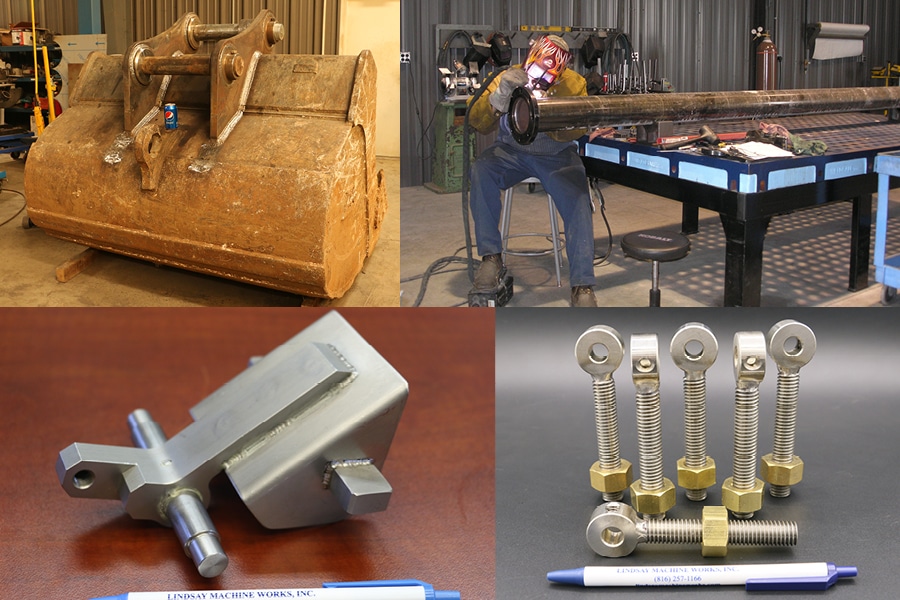
The shop’s forming equipment supports larger weldments, including a press brake that handles parts up to 10 feet wide, a plate roller up to 6.5 feet wide for barrels and rings, and a shear that cuts mild steel up to 1/4 inch thick and 12 feet wide. The welding department has also cut down and welded large steel parts, such as cave supports weighing more than 400 pounds each, welding them on all sides without sacrificing strength. You can see the full list of metal fabrication capabilities for more on cutting and forming.
Larger weldments often start as plate blanks. The shop’s plasma and waterjet tables each cut areas up to 60 by 120 inches, so wide plate parts can be cut, formed and welded without leaving the building.
What Parts and Industries Use MIG Welding?
 MIG welding is used on parts that need strength and repeatability more than a cosmetic finish. Typical MIG-welded parts include:
- Equipment frames and machine bases
- Brackets, mounts and guards
- Plate assemblies and weldments
- Enclosures and housings
- Repair welding on worn or damaged components
These parts show up across heavy equipment, transportation and industrial production. For example, construction equipment parts fabrication often calls for welded steel brackets, frames and replacement components.
If a welded part also needs machined features, such as a flat mounting face or a bored hole, secondary CNC milling or grinding is available in-house after welding.
Can You MIG Weld Repair Parts?
Yes. Lindsay Machine Works provides repair welding for damaged or worn components, and MIG is often the right process for steel repairs.
Send the part in, or start with clear photos, and the team will review the damage before quoting the repair. If a part can’t be repaired, the shop can fabricate a new one from your drawing or replicate the original part. That helps you get equipment back in service without waiting on a discontinued or back-ordered component.
How Are MIG Welds Inspected?
Lindsay Machine Works inspects parts in-house throughout the welding and fabrication process. Fabricated work is checked against your tolerances from the first piece to the last.
The quality control area is temperature-controlled around the clock. It includes hand-held gauges, calipers, micrometers and hardness testers, along with a CNC vision and probe inspection system and a coordinate measuring machine (CMM).
What Should You Send With a MIG Welding Quote Request?
A complete quote request gets you a faster, more accurate MIG welding quote. Try to include:
- A drawing or CAD file, or a clear photo of the part
- Material type and thickness
- Quantity, plus whether you expect repeat orders
- Required due date
- Any weld symbols, finish or inspection notes from the print
Turnaround depends on the size and complexity of the job. The team will give you a timeline and cost estimate before work starts.
Get a Quote on Your MIG Welding Project
Send your drawing or CAD file, material, quantity, and due date below. If you don’t have a drawing, a clear photo of the part is a good place to start.