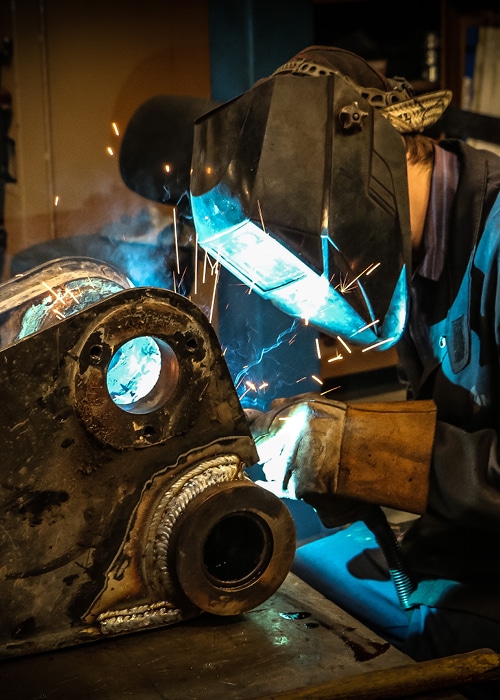
TIG Welding Services
WELDING FOR STAINLESS, ALUMINUM AND THIN MATERIAL
When a part is thin, made of stainless steel or aluminum, or needs a clean weld you can see, TIG welding services give you the control the job needs. Lindsay Machine Works, Inc. TIG welds precision parts, prototypes, and short-run production in its Independence, Missouri shop, alongside MIG and stick welding. In-house cutting, machining, and inspection help your welded parts match the print.
At Lindsay Machine Works, we provide reliable machining and welding services for projects of all sizes. From custom fabrication to production runs, our experienced team delivers accurate results, efficient turnaround times, and consistent quality you can count on.

What Are TIG Welding Services?
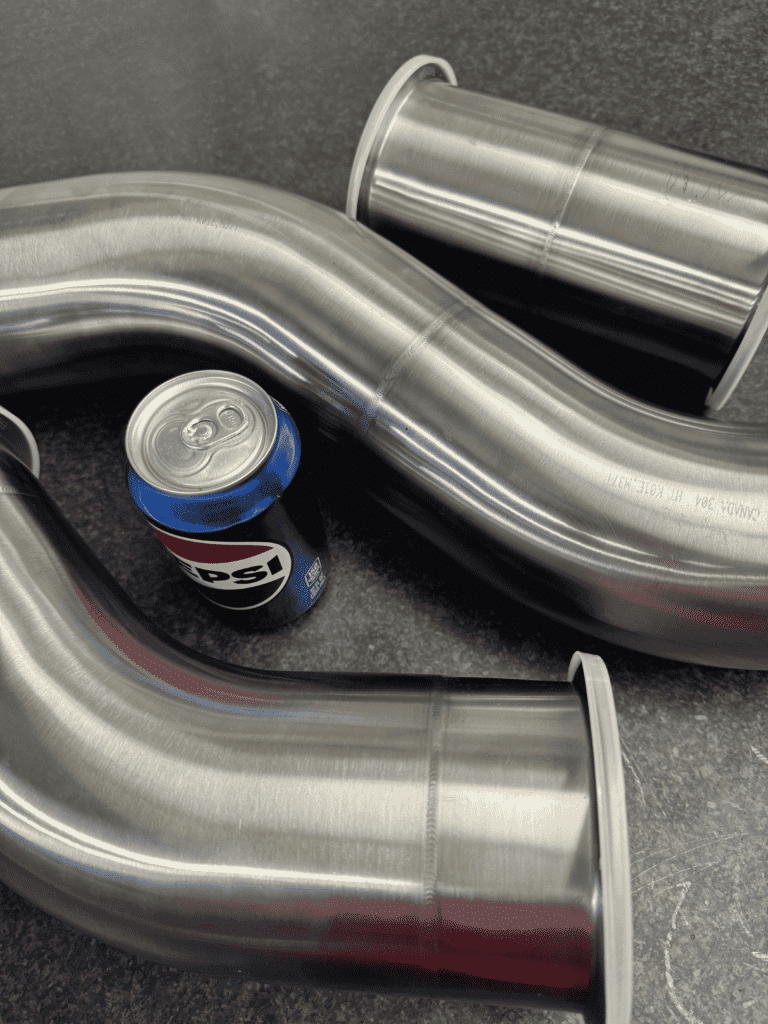 TIG welding services join metal with gas tungsten arc welding (GTAW), a process that uses a non-consumable tungsten electrode, a separate filler rod and a shielding gas. The welder controls heat and filler by hand, which allows small, precise welds.
Because the filler is added separately from the arc, TIG can lay small, neat welds on corners, edges and tight joints. That makes it a good fit for parts where the weld is visible or where extra weld metal would get in the way.
That control takes more time per inch than MIG welding, so TIG is usually chosen when weld quality, appearance or heat control matters most. Lindsay Machine Works offers TIG alongside MIG and stick welding, and the team chooses the process based on your material, thickness and project requirements. For a side-by-side look at both processes, read this guide to MIG vs. TIG welding.
Why Is TIG Welding Used for Thin Gauge Material?
TIG welding is used for thin gauge material because the welder can keep heat low and focused. That helps prevent burn-through and reduces warping on thin sheet and small parts.
Good thin-gauge welds also depend on tight fit-up. Lindsay Machine Works can cut sheet parts in-house with fiber laser cutting, which holds cut tolerances as tight as about ±0.005 inches on most sheet work. Clean, accurate edges make it easier to fit thin parts together before they’re welded.
When you send a thin-gauge job, list the material, gauge and any flatness or appearance requirements on the drawing. The team can then plan the fit-up and welding sequence before the first part is welded.
How Does TIG Welding Handle Stainless Steel?
TIG welding is a common choice for stainless steel because it gives a controlled, clean weld that keeps heat input low. That matters on stainless parts that will be seen, cleaned often or fitted into other equipment.
Lindsay Machine Works welds stainless steel parts such as frames, guards, mounts, housings and covers. Food processing equipment is one example, and the shop’s food-grade stainless steel fabrication work covers processing frames, plates, brackets and replacement parts. If your part has a finish requirement, note it on your drawing so the team can plan the weld and any finishing.
Stainless steel also holds heat longer than carbon steel, which can lead to distortion on thin parts. TIG lets the welder add heat in small, controlled amounts, which helps keep stainless parts flat and true to the print.
TIG welds on stainless often need little cleanup compared with other processes. If your part needs a specific surface finish after welding, a polisher and edge rounder are available in the shop.
Can You TIG Weld Aluminum?
Yes. Lindsay Machine Works welds aluminum, and TIG is often the process of choice when an aluminum part is thin or needs a clean weld.
Aluminum pulls heat away from the weld quickly and forms a surface oxide layer, so it needs careful heat control. TIG lets the welder adjust heat as the weld progresses. Send your aluminum grade and thickness with your drawing, and the team will confirm the right approach before quoting.
Aluminum brackets, mounts and assemblies are common TIG jobs. If the aluminum part also needs cutting or machining, those steps can happen in the same shop.
Where Does TIG Welding Make the Most Sense?
TIG welding makes the most sense when the weld itself is part of the quality of the finished part. Common TIG jobs include:
- Thin sheet metal parts and enclosures
- Stainless steel frames, guards and housings
- Aluminum brackets and assemblies
- Precision weldments that are machined after welding
- Prototypes and short-run production parts
Because CNC milling and grinding are available in-house, a TIG-welded assembly can be machined after welding if a surface or feature needs a tighter tolerance. That keeps welding and machining in one shop instead of two.
Can You TIG Weld Prototypes and Short Runs?
Yes. Lindsay Machine Works specializes in short-run manufacturing and also builds one-off prototypes, so TIG work from a single part to a small batch fits the shop well.
Prototypes are a good time to confirm fit, weld size and appearance before you order more. Once the first part is approved, repeat runs can be built to the same drawing revision. The team can work from CAD files, engineered blueprints or hand-drawn sketches, or replicate an existing part.
How Are TIG-Welded Parts Inspected?
Lindsay Machine Works inspects parts in-house throughout the welding and fabrication process. Each job is checked against your print before it ships.
The shop’s quality control equipment sits in a temperature-controlled environment around the clock. It includes hand-held gauges, surface plates, calipers and micrometers, along with a CNC vision and probe inspection system and a coordinate measuring machine (CMM) for dimensional checks.
If your print calls for a specific inspection or report, note it on your quote request. The team can then plan for it from the start instead of after the parts are welded.
What Should You Include in a TIG Welding Quote Request?
Detailed requests get faster, more accurate TIG welding quotes. Most should include:
- A drawing or CAD file, or a clear photo of the part
- Material, grade and gauge or thickness
- Quantity and whether repeat orders are expected
- Required due date
- Weld callouts, finish requirements and inspection notes
Turnaround depends on the size and complexity of your project. The team will give you a timeline and cost estimate before work starts.
Get a Quote on TIG Welding
Send your drawing or CAD file, material, quantity, and any finish requirements through the request for quote button below, or give us a call. The shop minimum is $200 per project, so prototypes and small runs are welcome.